

April 2025
Firearm Storage Laws in Europe
Even though the European market is harmonized, for storing weapons a harmonization does not exist. This White Paper gives an overview of the weapon storage laws of 27 European countries and summarizes advantages and disadvantages of different possibilities.
September 2024
ATMs tested against explosive attacks
Several security solutions aiming to protect against ATM explosive attacks are available. Some of the solutions aim to stop the explosion from happening/reduce the damage others aim to destroy the content inside of the ATM. This White Paper gives a brief introduction on the general attack strategies of the burglar and gives in depth background on one of the solutions against these attacks: Explosive tested ATM safes according to the European Standard EN 1143-1.
January 2024
Secure Cabinets
Secure Cabinets are primarily used in private residential setting to secure goods with lower value. They are intended to protect against opportunist burglaries only for a short time.
This White Paper gives a detailed evaluation of Secure Cabinets, which are certified according to the European Standard EN 14450. In addition, EN 14450 secure cabinets are compared to other secure storage units.
October 2023
Burglary resistant construction products (EN 1627)
This White Paper gives a simplified introduction to the testing procedures and the requirements of the European burglary resistance door, window and shutter standards EN 1627, EN 1628, EN 1629 and EN 1630. It is written for insurers or manufacturers and distributors that have not yet been in contact with these products.
August 2022
General Requirements of the New Standard for Distributed Systems EN 17646
On the basis of this document, the reader can inform themselves on the new European standard and know which requirements future products according to the EN 17646:2022 will be tested to. This White Paper simplifies the requirements so that they are understandable to the general public and only shows a small percentage of the requirements of the document.
July 2022
T2 tool option of EN 1143-1
In April 2019 the European Standard for safes, ATM safes, strongrooms and strongroom doors (EN 1143-1) was updated. The document now includes a new "T2 option" (attack with amended set of tools). This White Paper gives background information on the additional tools that can be used for the "T2 grades" (0 T2, I T2, II T2, III T2, IV T2…XIII T2).
February 2022
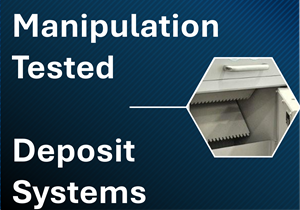
Background Information on Deposit Systems according to EN 1143-2, EN 1143-1, UL 771 and UL 687
Deposit systems allow persons to deposit valuables (the “deposit”) into a secure container, without having access to the complete content. Only certain persons have access to the complete deposited money or other valuables. This White Paper gives an overview of different security tests performed according to different European and US standards and gives an overview, which type of system protects against which attack.
August 2021
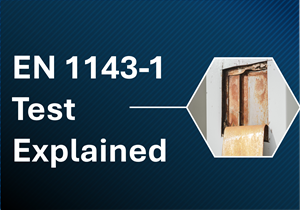
Testing of Safes according to the European Standard EN 1143-1
The European Standard EN 1143-1 specifies the requirements on how a safe shall be tested and classified. However, it does not include all the background discussions on why different requirements were set. Aim of this White Paper is to give a general background on the testing requirements of EN 1143-1.
March 2021
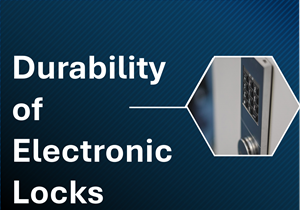
Durability of Electronic High Security Locks
User demands and the number of electronic locks have increased during the years. The durability of electronic locks is often higher than expected and depending on the application can be used longer than a decade. This White Paper focuses on the durability of electronic high security locks used in safes and gives recommendations on their service.
February 2021
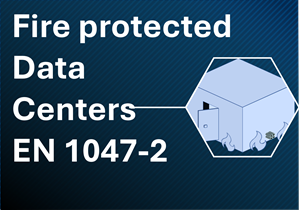
Comparison of fire resistance standards for data centres
This White Paper compares standards that use test procedures to determine the extent to which various structural measures can protect a data centre from external fire loads. The following standards are compared:
EN 1047-2, EN 1363-1 (resp. EN 13501-2), DIN 4102-2, BS 476-20 and NFPA 75.